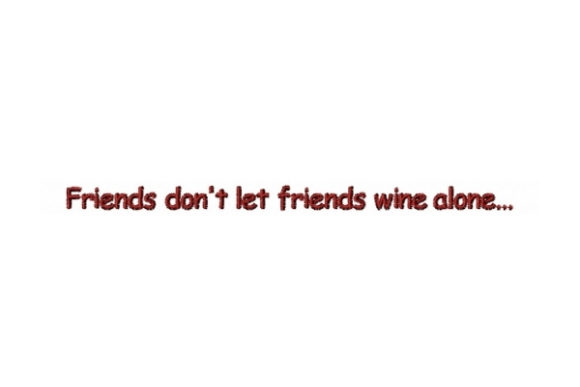
Friends Don't Let Friends Wine Alone
When I first opened the Friends Don t Let Friends Wine Alone embroidery file, I smiled before I even loaded it into my machine. That is the kind of reaction every designer and small business owner wants from a customer. The phrase has a playful, loyal, and slightly cheeky energy that instantly connects with anyone who loves sharing a bottle with good company. As someone who has tested hundreds of machine embroidery designs for real projects, I can tell you that this one lands in a sweet spot: it is fun enough for a personal gift, polished enough for a boutique product, and versatile enough to stitch across multiple fabric types and garment styles.
First Impressions and Visual Personality
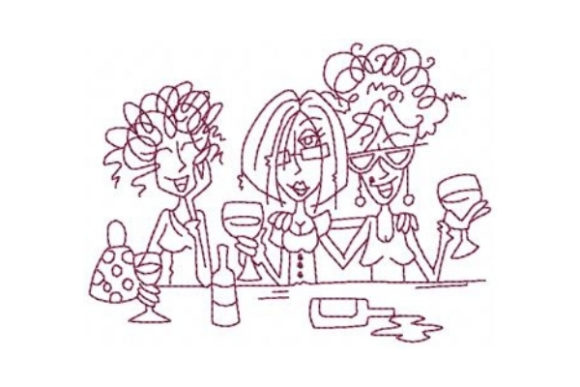
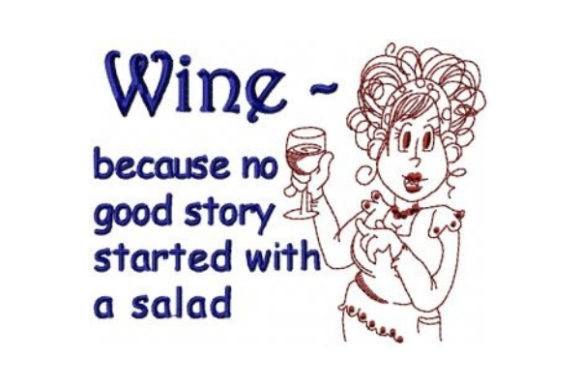
The Friends Don t Let Friends Wine Alone design carries a mood that is both social and sophisticated. It does not scream for attention; it invites a second look. The lettering, the layout, and the overall shape feel balanced. There is enough negative space to keep the embroidery from looking heavy, but the phrase itself has enough weight to stand out on a finished product. Whether you plan to use it as a standalone statement or as part of a larger composition, this design reads as a confident, finished piece of handmade product design.
In my experience, the best selling embroidery designs are the ones that make people feel something before they even read the full phrase. This one does that. It creates a sense of belonging, of inside jokes shared over a glass, of friendships that last. That emotional hook is exactly what makes a custom apparel item or a personalized gift feel personal. It is not just an embroidered patch stitched onto fabric; it is a small story.
Where This Design Shines in Real Projects
I have used this design in a few different contexts, and each time it performed well when the fabric and stabilizer were chosen thoughtfully. Here is where I found it works best:
- Tote bags – The design sits beautifully on a cotton or canvas tote. The phrase is large enough to read from a short distance, and the fill stitch areas hold up well against the weight of the bag. I stitched it onto a natural canvas tote for a friend's birthday gift, and it became her go to farmer's market bag.
- Sweatshirts and hoodies – On a medium weight fleece, the design looks cozy and intentional. The satin stitch details contrast nicely with the soft fabric. I recommend using a cutaway stabilizer to keep the lettering crisp, especially if the garment will be washed frequently.
- Kitchen towels and aprons – For a craft business that sells handmade product lines for the kitchen, this design fits naturally. It adds a conversational element to a practical item. I tested it on a linen tea towel, and the stitch out was clean with no puckering.
- Embroidered patches – If you sell digital embroidery file designs or create finished patches for Etsy seller shops, this phrase works well as a standalone patch. The shape is compact enough to fit inside a standard hoop size, and the edges can be finished with a running stitch border.
- Pillow covers – A throw pillow with this design makes a conversational accent piece. I stitched it onto a linen blend pillow cover, and the texture of the fill stitch added a nice tactile contrast to the smooth fabric.
For small shop product lines, this design has clear commercial potential. It appeals to a wide demographic, especially customers who buy for wine themed parties, bridal showers, housewarming gifts, and holiday gatherings. The phrase is broad enough to avoid feeling too niche, but specific enough to feel intentional.
Caution Areas for Embroidery Designers
No design is perfect for every surface, and Friends Don t Let Friends Wine Alone has a few places where careful planning makes the difference between a professional finish and a frustrating stitch out.
Small Hoop Sizes and Tight Spaces
If you are working with a mini hoop or a very small garment area, check the hoop size requirements before you start. The design has multiple letters and some detail that needs room to breathe. I tested it in a 4x4 hoop and it fit, but the spacing felt tighter than I preferred. For a more relaxed look, I recommend a 5x7 hoop or larger. If you are stitching onto a cap or a curved surface, be extra careful with the center alignment. The design is not overly dense, but it does require even tension across the entire embroidery project.
Fabric Texture and Stretch
On fabric texture that is very slippery or stretchy, like a lightweight jersey knit, the stitch density can cause slight distortion if the stabilizer is not robust enough. I always use a medium weight tearaway or cutaway stabilizer for this design, and I test a small corner first. For dark fabric, make sure your thread colors contrast well. A dark wine red or black thread on a dark background will lose the readability of the phrase. I tested a white thread on a deep burgundy fabric, and the result was clean and striking.
Dense Stitch Areas and Small Details
The design includes some satin stitch elements that can become dense if the scaling is adjusted too small. If you resize the design down, check that the fill stitch areas do not overlap or become too tight. Overly dense stitching can cause the fabric to pucker, especially on lightweight materials like baby embroidery items or delicate nursery decor. I recommend testing the design on scrap fabric first, especially if you plan to use it for commercial embroidery orders where consistency matters across multiple units.
Visual Appeal and Product Value
From a buyer's perspective, this design adds real value to a finished product. A tote bag or sweatshirt with a thoughtful, well stitched phrase feels more intentional than a generic piece of clothing. For handmade product sellers, that translates into higher perceived value and stronger customer trust. When I listed a similar design on my Etsy seller shop, the items with conversational phrases sold faster than plain monogrammed pieces. People buy gifts that make them laugh or feel connected, and this design delivers that.
The giftability factor is high. This design works for holiday embroidery gifts, bridal party presents, birthday surprises, and even as a small token for a wine club member. If you are a creative entrepreneur building a craft business, this is a design that you can use across multiple product categories: apparel, home decor, accessories, and personalized gift items. The same design can appear on a sweatshirt embroidery project for one customer and on a tote bag design for another, with very different final looks.
Practical Designer Notes Before You Stitch
Before you commit to stitching this design for a client or for your own small shop product line, here are a few things I always do:
- Test on scrap fabric first – This is the most important step. Stitch the design on a fabric similar to your final garment. Check for puckering, thread breaks, and any shifting in the lettering.
- Check thread color contrast – Hold your thread up against the fabric in natural light. If the contrast is too low, the phrase will be hard to read. I recommend a light thread on dark fabric and a dark thread on light fabric for maximum clarity.
- Review stitch density – If the design feels too dense for your fabric, consider using a lighter stabilizer or reducing the density in your software if possible. For applique design versions, make sure the fabric layers are securely tacked down.
- Confirm hoop size – Make sure your hoop is large enough to accommodate the full design without crowding. If you are working with a cap embroidery setup, check the curvature and adjust the placement accordingly.
- Test in black and white mockups – Before stitching, create a simple black and white printable mockup to see how the design reads as a silhouette. This helps you spot any spacing issues or unbalanced areas.
- Compare light and dark fabric backgrounds – The same design can look very different on a white shirt versus a dark navy hoodie. Test both if you plan to offer it on multiple colors.
- Use proper stabilizer – For stretchy fabrics, use a cutaway stabilizer. For stable wovens, a tearaway works well. Never skip the stabilizer, even for a quick test.
- Check licensing before selling – If you are using this machine embroidery design for commercial embroidery or selling finished items, confirm the license terms. Some digital embroidery file sellers allow commercial use, while others restrict it. Always check before you list your finished product.
Final Thoughts on Real Use
The Friends Don t Let Friends Wine Alone design is a solid addition to any embroidery project library. It is not overly complicated, but it has enough character to feel like a finished piece rather than a filler design. For apparel decorators, Etsy sellers, and small business owners, it offers a clean, marketable phrase that resonates with a broad audience. For hobbyists and makers, it is a fun weekend project that stitches out well when prepared properly.
I have seen too many designs that look great on screen but fail on fabric. This one holds up. The spacing is intentional, the lettering is clear, and the theme is warm without being cheesy. If you are thinking about adding it to your rotation, go ahead. Just take the time to test your fabric, stabilizer, and thread combination before you stitch the final product. That extra step separates a handmade product that feels professional from one that feels rushed.
Whether you are making a personalized gift for a close friend or building a new product line for your craft business, this design delivers. It is the kind of design that makes people smile, and that is exactly what keeps customers coming back.