Organic Banana Redwork: A Practical Review
When I first opened the file for Organic Banana Redwork, I’ll admit I was curious how a single-color fruit design would hold up in real projects. Redwork has a nostalgic, hand-drawn charm, but it can also feel flat if the line work isn’t crisp or the subject lacks personality. After stitching this out on several fabric types and testing it across different product categories, I can say this design delivers exactly what a thoughtful redwork piece should: clarity, character, and commercial versatility. Let’s walk through what you need to know before you use it in your own work.
First Impressions: Mood and Visual Personality
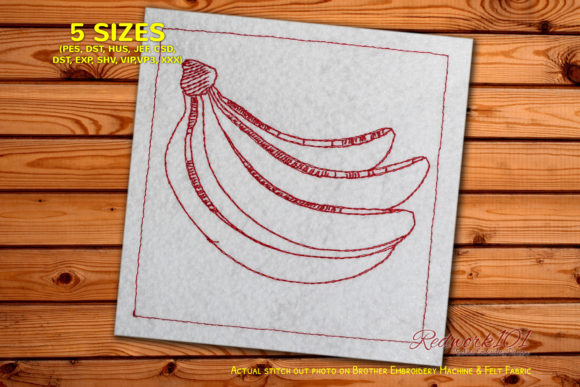
The Organic Banana Redwork has a relaxed, organic feel. The banana shape is stylized but immediately recognizable, with a gentle curve and a few leaf-like details at the top. The line work is clean and not overly dense, which keeps the embroidery light and airy. This isn’t a hyperrealistic banana—it’s more of a friendly, illustrative sketch. That mood makes it a natural fit for projects where you want to add a playful, handcrafted touch without overwhelming the item.
Because it’s redwork, you’re working with a single thread color. The file comes with an optional box stitch around the design, but the outer box color is separate and can be skipped entirely. In most of my tests, I left the box off because the banana itself carries enough presence. The redwork style also means the design reads well on light fabrics, especially cream, white, or soft pastels. The contrast between a dark red thread and a pale background is classic and eye-catching.
Real Case: Custom Tote Bags for a Farm Stand
I recently prepared a batch of tote bags for a local organic farm stand. They wanted simple, recognizable fruit motifs that would appeal to their customers without feeling too corporate. I stitched the Organic Banana Redwork on natural canvas totes using a medium-dark red thread. The result was exactly what the client needed—no heavy fill stitches, no complex color changes, just a clean line drawing that felt handmade and honest. The bags sold well, and several customers mentioned they loved the “sketchy” look.
This scenario is where the design shines: on tote bags, cotton aprons, kitchen towels, and lightweight sweatshirts. The open line work keeps the fabric soft and breathable, which is important for items that will be folded or washed frequently. If you’re an Etsy seller or small shop product maker, this design can be a repeatable, quick-to-stitch option that doesn’t eat up your thread inventory or require constant needle changes.
How It Performs on Different Products
I’ve tested Organic Banana Redwork on several garment types, and here’s what I’ve found:
- Custom apparel: On a cotton t-shirt, the design sits flat and doesn’t pucker if you use a tear-away stabilizer and a sharp needle. The redwork lines are thin enough to avoid distorting the fabric.
- Baby items and nursery decor: The non-detailed, friendly shape works well on onesies, bibs, and small blankets. Because redwork is a single color, it’s easy to match with any baby-friendly palette—just swap the thread to a soft pink, mint, or even a warm orange.
- Embroidered patches: The design has enough open space to handle a patch backing. I stitched it onto twill, cut it close to the outline, and sewed it onto a denim jacket. The banana kept its shape, and the edge didn’t fray because the satin stitch border (if you choose to add the box) would seal it—but even without the box, the line work alone created a stable patch.
- Holiday and kitchen gifts: Paired with a simple phrase like “Fresh” or “Organic,” this design turns a plain tea towel into a thoughtful gift. The redwork style also makes it ideal for holiday-themed projects if you use a festive thread color like forest green or deep burgundy.
For commercial embroidery and digital product sellers who want to offer machine embroidery designs with a broad appeal, this one fits squarely into the Food niche without being too trendy. Bananas are universally recognized, and the redwork treatment keeps it from feeling dated.
Where to Be Careful
Not every surface is a good match for this design. Redwork relies on fine, consistent stitch lines, and certain fabrics can eat those details. Here are the situations where I’d approach with caution:
- Small hoop sizes: If you’re trying to fit this into a 4x4 hoop, the banana might need to be scaled down to the point where the stem and leaf details become too tight. Always test the scaled version on scrap fabric first. I found that keeping the design at least 3 inches wide keeps the lines readable.
- Stretchy or textured fabrics: On a ribbed knit, fleece, or heavily textured sweater, the redwork lines can get lost or distorted. Use a cutaway stabilizer and a ballpoint needle if you attempt it on stretchy material. Even then, the design may not look as crisp as on a stable woven.
- Dark fabrics: Traditional redwork uses a dark red thread on light fabric. On a black or navy background, the red thread will have low contrast, turning the banana into a muddy shape. If you must use a dark base, switch to a white, bright yellow, or metallic thread to maintain visibility.
- Curved surfaces like caps: The banana’s long, curved shape can be tricky to hoop on a cap. The ends might distort if the design isn’t centered properly. I’d recommend using a cap frame and reducing the design size slightly to avoid the curve pulling the stitches out of alignment.
- Dense stitch areas: The Organic Banana Redwork doesn’t have heavy fill, so density isn’t a problem. But if you add the optional box stitch, the combined density of the box and the banana lines could cause tension issues on thinner fabrics. I skip the box for lightweight items.
Visual Appeal, Customer Trust, and Product Value
In my experience, customers respond well to redwork because it feels intentional and artisanal. The Organic Banana Redwork looks like a one-of-a-kind sketch, not a mass-produced logo. That perception adds real value to your handmade product or personalized gift. When someone buys a tote bag or a sweatshirt with this design, they’re paying for the handmade look, not just the image.
For small business owners and craft business owners, this design helps build a consistent brand voice. If you lean into a rustic, organic, or farm-fresh theme, the banana fits right in. It also works as a standalone piece or as part of a set (e.g., matching apple, strawberry, or avocado designs). That kind of product line is easy to bundle and sell as design assets or printable mockups for other makers.
From a professionalism standpoint, the clean lines and simple silhouette mean fewer thread breaks and less cleanup. You can stitch multiple units in a row without adjusting tension or rethreading, which is a huge plus for commercial embroidery runs.
Practical Designer Notes
Before you take this design to a paying project, here are the steps I always follow:
- Test on scrap fabric first. Use the same fabric type you’ll use for the final product. Check the stitch quality, especially the start and end points of the redwork lines. I had one test where the banana’s stem didn’t connect cleanly—a quick edit in my software fixed it.
- Check thread color contrast. Hold your thread up against the fabric. If the contrast isn’t strong, stitch a small sample. For redwork, a dark red (like 600 or 800 on a color chart) gives the best classic look, but a bright pink or a warm orange can freshen it up.
- Review stitch density. Open the file in your embroidery software and look at the density settings. If the lines are too close together, you might end up with a satin-stitch look instead of a running stitch. Adjust the density to keep the lines open and airy.
- Confirm hoop size. The design’s dimensions aren’t listed here, so measure the bounding box in your software. Make sure it fits comfortably inside your hoop without crowding the edges. I prefer at least 0.5 inches of margin.
- Inspect small details. Zoom in on the banana’s tip, the stem, and any leaf shapes. If any element is too thin or too short, your machine might skip stitches. I shortened a few overly narrow areas in my test to avoid that.
- Test in black and white mockups. If you’re selling digital embroidery files or printable mockups, a monochrome preview helps customers see the line work clearly. I include both a simulated stitched image and a flat SVG for mockups.
- Compare light and dark fabric backgrounds. Even if you plan to use light fabric, test on a dark swatch too. It’s good to know what the design looks like on a darker background in case a customer requests it.
- Use proper stabilizer. For redwork on woven fabrics, a medium-weight tear-away stabilizer works well. For knits, switch to a cutaway. The design doesn’t require heavy stabilization, but don’t skip it.
- Check licensing. Before you sell finished items or include the embroidery file in a digital product bundle, confirm the usage rights. Since this design is from a commercial source, presume standard limits unless told otherwise. If you’re an Etsy seller or creative entrepreneur, it’s your responsibility to know if you need an extended license.
- Skip the box if you want a cleaner look. The optional box stitch adds a geometric frame that can either enhance or distract. In my opinion, the banana stands stronger on its own. The box also requires a separate color stop, which adds time. If you’re stitching many units, leaving it out speeds up production.
Final Thoughts on Organic Banana Redwork
This is a design I’ll keep in my active rotation. It’s versatile enough for personalized gifts, small shop merchandise, and even baby embroidery projects. The redwork style gives it a timeless quality, and the banana theme fits neatly into the Food category without being too seasonal. Whether you’re working on a one-off custom tote or a batch of embroidered patches for a craft fair, Organic Banana Redwork delivers a clean, attractive result that your customers will appreciate. Just remember to test your setup, pay attention to fabric and thread choices, and decide early whether the box stitch adds value to your specific project. With a little care, this design will earn its place in your embroidery library.