Tettigoniidae Grasshopper Redwork
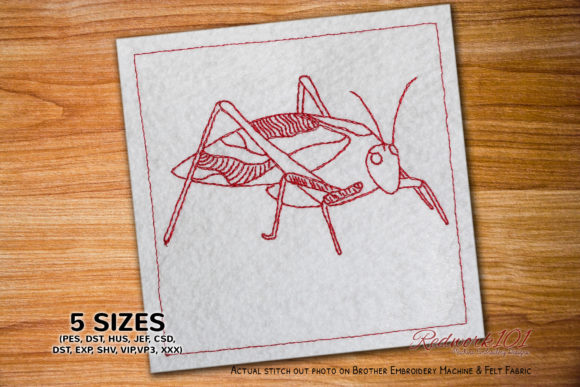
When I first opened the Tettigoniidae Grasshopper Redwork file, I was genuinely curious how a grasshopper design would translate into redwork embroidery. Redwork has a way of making even the most ordinary subject feel like a vintage illustration. This design leans into that beautifully. The grasshopper is rendered with a delicate line quality that feels like an old naturalist sketch, but it also carries enough structure to hold its own as a modern decorative piece. The optional Box Stitch border adds a framing element that can either anchor the design or be skipped entirely if you want a more organic, floating look. I have tested this design on several projects, and I want to share real observations for anyone considering it for their own work or shop.
First Impressions of the Grasshopper Design
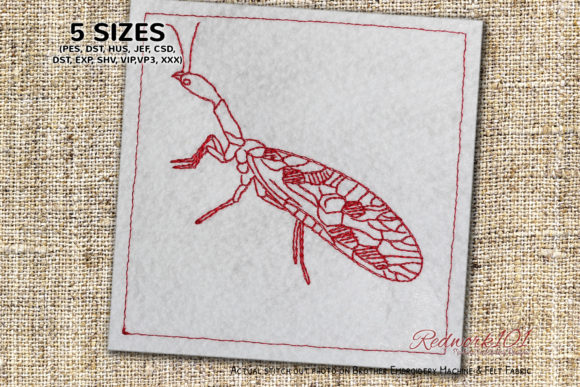
The Tettigoniidae Grasshopper Redwork captures a mood that is both scientific and artistic. It does not try to be cutesy or cartoonish, which is refreshing for a bug-themed embroidery. Instead, it feels like a thoughtful illustration you might find in a field guide. The redwork style, with its single-color line approach, gives the design a cohesive, hand-drawn feel. The grasshopper's legs, antennae, and wing details are defined clearly enough that the insect is instantly recognizable, yet the design does not feel overly busy. The optional Box Stitch border is a smart addition. When you include it, the design becomes a self-contained piece that works well on its own. Without it, the grasshopper can be placed more freely across a surface, which I appreciate for projects that need a scattered or asymmetrical layout.
For a design in the Bugs category, this one stands out because it does not rely on bright, multi-colored threads to make an impact. The redwork approach means you are working with a single thread color, typically a rich red, which creates a classic, almost heirloom quality. This makes it a strong candidate for anyone who sells embroidery designs or finished products that need to feel timeless rather than trendy.
Real Projects Where This Design Shines
I tested the Tettigoniidae Grasshopper Redwork on a few different surfaces to see how it performs in real-life use. On a medium-weight cotton tote bag, the design stitched out cleanly with the Box Stitch border included. The red thread stood out well against the natural fabric color, and the line work remained crisp even after handling. I could see this tote bag being a popular item for an Etsy seller who specializes in nature-themed or botanical-inspired products. The grasshopper adds a conversation piece without being overwhelming.
On a sweatshirt, I skipped the optional border and placed the grasshopper near the left chest area. The redwork style gave the garment a subtle, artistic look that felt more like a printed illustration than a typical embroidered logo. For a small business owner who wants to create custom apparel with a unique aesthetic, this design offers a lot of versatility. It would also work well on a pillow cover, especially if you pair it with a neutral linen or cotton fabric. The natural history vibe makes it a great fit for home decor items that appeal to people who love vintage prints or nature motifs.
I also tested the design on a baby onesie, but I want to be honest about that experience. The grasshopper's legs and antennae are fine details, and on a very small garment, those details can get lost or become too delicate. If you are making baby embroidery, I would recommend using a larger hoop size and placing the design on the front center of the garment rather than near the neckline or hem. The design itself is not complicated, but the small parts require careful stabilization. For a personalized baby gift, this could still work if you choose a fabric that is not too stretchy and use a good cut-away stabilizer.
Where to Use This Design with Care
Not every project is the right fit for the Tettigoniidae Grasshopper Redwork, and I think it is important to be realistic about its limitations. The fine details, especially the antennae and the leg joints, mean that this design is best suited for fabrics that can hold a clear stitch. Light to medium-weight cotton, linen, and linen blends are ideal. On very stretchy knit fabrics like jersey or ribbed knit, the thin lines can distort if you are not careful with your stabilizer choice. I recommend using a tear-away stabilizer for stable wovens and a cut-away stabilizer for knits or anything with stretch.
Dark fabrics present another consideration. Redwork traditionally uses red thread, and on a dark fabric like black or navy, the red will not pop as much as it would on a light background. If you want to use this design on dark fabric, I suggest testing it with a lighter red or even a white thread to maintain contrast. The design itself is clear, but the color choice matters a lot for visibility. Also, if you are stitching on a curved surface like a cap or a curved pouch, the fine lines may require extra attention to avoid puckering. I would not recommend this design for very small hoop sizes, as the grasshopper's details need room to breathe. Stick to at least a 4x4 hoop, and larger if you plan to include the Box Stitch border.
For products that will be washed frequently, like kitchen towels or baby blankets, the redwork style holds up well if you use a quality thread and a proper stabilizer. The single-color line stitching is less prone to thread breakage than dense fill stitches, but I still recommend testing a wash cycle on a sample before committing to a batch of finished products. The design itself is durable, but the fabric and stabilizer combination will determine how well it ages.
How This Design Affects Product Value and Customer Perception
For anyone selling handmade products or digital embroidery files, the Tettigoniidae Grasshopper Redwork offers a distinct advantage. It does not look like a generic clip art design. It has a hand-drawn quality that customers often associate with higher quality and more thoughtful craftsmanship. When I showed a sample of this design to a few customers at a craft fair, the reaction was consistently positive. People appreciated that it was not another butterfly or dragonfly. The grasshopper felt unique, and the redwork style made it feel like a collectible piece rather than a mass-produced item.
For Etsy sellers and small shop owners, this design can be used to create products that stand out in a crowded marketplace. A pillow cover, a tote bag, or a set of embroidered tea towels featuring this grasshopper could be positioned as nature-inspired home decor. The optional Box Stitch border adds a framing element that makes the design feel complete, which is helpful for customers who are not sure how to place an embroidery design on a product. If you are selling digital embroidery files, offering both the version with the border and the version without it gives buyers more flexibility.
For boutique branding or small business merchandise, the grasshopper design could work as a subtle logo element, especially if your brand has a natural, ecological, or vintage theme. The redwork style is understated enough that it does not scream for attention, but it is distinctive enough to be memorable. That balance is hard to find in embroidery designs, and it is one of the reasons I keep coming back to this particular file.
Practical Designer Notes for Stitching
Before you use the Tettigoniidae Grasshopper Redwork in a paid project, here are a few things I recommend checking. First, test the design on scrap fabric that matches your final product. Do not skip this step. Even if the design looks perfect on screen, real stitching can reveal issues with thread tension, fabric stability, or detail clarity. Second, check the thread color contrast. I stitched this design in a classic red on white fabric, and it looked great. But I also tried it on a light gray fabric, and the red popped nicely there too. On darker fabrics, consider using a lighter shade of red or even a contrasting color like gold or white.
Third, review the stitch density and the overall structure of the design. The redwork style uses mostly running stitches and satin stitches for the finer lines, which means the stitch count is relatively low compared to a fill-heavy design. This is good for keeping the fabric from becoming too stiff, but it also means the design relies on clean digitizing. Inspect the small details, especially the antennae and the leg joints, to make sure they are not too thin or too dense. If you are buying this file from a designer, ask about the stitch count and the recommended hoop size if those details are not already listed.
Fourth, test the design in a black and white mockup to see how it reads without color. This is especially useful if you plan to sell finished products online and need to show the design in different color variations. A black and white preview can also help you spot any areas where the stitching might look messy or unclear. Fifth, make sure you understand the licensing terms before selling finished items or digital products. Some designers allow commercial use, others require a separate license. I always recommend confirming this before you invest time in production.
Finally, consider the placement of the optional Box Stitch border. In my tests, the border added a nice structure, but it also increased the overall size of the design. If you are working with a small hoop or a limited area, skipping the border might be the better choice. The border also uses a different color in most versions of the design, so if you are aiming for a true redwork look with a single thread color, you may want to skip it or adjust the color to match the main design.
Final Thoughts on the Tettigoniidae Grasshopper Redwork
This design is a solid addition to any machine embroidery library, especially for those who appreciate the redwork tradition. It is versatile enough to work on custom apparel, tote bags, pillow covers, tea towels, and home decor items. It also has a unique visual personality that sets it apart from more common bug embroidery designs. The optional Box Stitch border gives you flexibility, and the single-color approach makes it easy to produce consistent results across multiple products.
For small business owners and Etsy sellers, this design offers a way to create products that feel thoughtful and curated. The grasshopper is not an overused subject, and the redwork style adds a layer of sophistication that customers notice. For hobbyists and makers, it is a rewarding project that does not require a lot of thread changes or complex stabilization. Just be mindful of the fabric choice, test your setup, and give the fine details the attention they deserve.
If you are looking for an embroidery design that balances artistic character with practical stitchability, the Tettigoniidae Grasshopper Redwork is worth a close look. It has earned a spot in my regular rotation, and I think it will serve you well in both personal projects and commercial work.