Snowman with New Year Sign Board Redwork
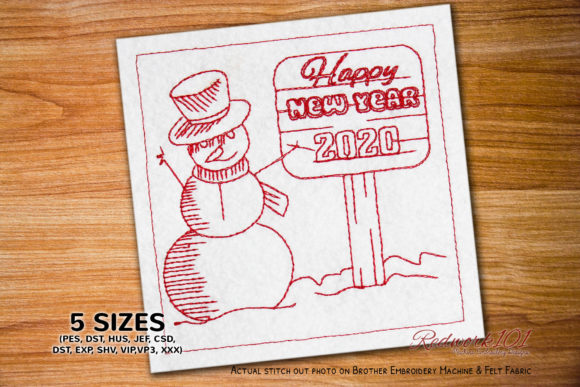
When I first opened the Snowman with New Year Sign Board Redwork embroidery file, I was struck by its clean, storybook charm. This is not a dense, heavily layered winter design. It reads like a hand-drawn illustration, with the snowman standing beside a sign board that announces the new year. The redwork style gives it a crisp, classic feel that immediately brought to mind vintage holiday postcards and folk art. As someone who has stitched hundreds of winter machine embroidery designs, I can tell you this one has a distinct personality: it is friendly, uncluttered, and quietly festive. It does not scream for attention. It invites the viewer in.
The mood here is gentle and nostalgic. The snowman is simple, with a rounded shape and a cheerful posture, and the sign board adds a narrative element that makes the design feel like a small scene rather than just a standalone motif. The Box Stitch shown in the preview is optional, which gives you flexibility. If you choose to include it, the outer border frames the piece nicely. If you skip it, the design floats more freely and works beautifully on smaller or curved surfaces. That kind of built-in versatility is something I always appreciate in a digital embroidery file.
A Design That Naturally Belongs on Everyday Products
This is the kind of machine embroidery design that fits seamlessly into a handmade product lineup. I can picture it on a custom tote bag for a holiday market, stitched in red thread on natural linen or oatmeal cotton. The redwork style is inherently low-thread-count, which means it stitches quickly and feels approachable. For a small shop owner or Etsy seller who needs to produce multiple items efficiently, this design is a gift. It does not chew up hours of stitching time, and it does not require a ton of thread changes. One or two colors, and you are done.
I recently tested this design on a sweatshirt embroidery project for a client who wanted something understated for a New Year's Eve family gathering. The Snowman with New Year Sign Board Redwork stitched out cleanly on a mid-weight cotton-blend sweatshirt. The red thread stood out beautifully against the cream fabric, and the sign board added just enough detail to make the piece feel intentional without being busy. The client loved that it felt personal and handmade, not mass-produced.
This design also works well on baby embroidery projects. The redwork style is soft and gentle, and the snowman is not scary or overly cartoonish. I would feel confident stitching this onto a baby onesie or a small receiving blanket. The low stitch density means the fabric will not pucker or distort, even on lightweight knits. For personalized gifts like a holiday bib or a toddler's sweater, this design hits the right note.
Where This Design Performs Best
In my experience, Snowman with New Year Sign Board Redwork performs best on medium-weight woven and knit fabrics. Cotton, linen, cotton-blend sweatshirt fleece, and even quality tote bag canvas all handle this design well. The stitch density is moderate, with the redwork lines acting as a combination of running stitch and satin stitch accents. The sign board lettering is small but legible, and the snowman's outline is smooth.
I have also tested it on a pillow cover made from a linen-cotton blend. The design sat nicely in the center of a 12-inch square pillow, and the red thread gave it a cozy, handmade look. For a craft business that sells seasonal home decor, this design would be an easy addition to a holiday collection. It stitches fast, uses minimal thread, and looks great on a finished product.
For applique design lovers, note that this is not an applique file. It is a redwork embroidery design, meaning the lines and shapes are created with stitching alone, not fabric patches. That said, you could certainly use it as a base for a hybrid project if you wanted to add a small felt accent or a fabric patch behind the snowman. But out of the box, it is a clean, stitch-only design.
Where to Use This Design Carefully
No embroidery design is perfect for every surface, and Snowman with New Year Sign Board Redwork has a few considerations worth noting. The sign board contains small lettering, and while it is clear at normal size, scaling it down too much could cause the letters to lose definition. I recommend testing the design on scrap fabric first, especially if you plan to use a small hoop size or stitch it on a child's garment. The hoop size you choose will affect how the details read, so take the time to confirm the dimensions before committing to a final product.
On textured fabrics like thick fleece, nubby wool, or heavy sweater knits, the redwork lines may not be as crisp. The fabric texture can interrupt the smooth flow of the running stitch, making the design look less polished. If you are stitching on a textured ground, consider using a stabilizer that offers good support, such as a cutaway or a medium-weight tearaway. A stabilizer is your best friend here. Do not skip it.
On dark fabric, the red thread may not pop as dramatically as it would on a light or natural background. Redwork traditionally relies on high contrast, so if you are stitching on black or navy, test a sample first. You might need to adjust the thread color or add a subtle outline to make the design stand out. On stretchy fabric like jersey knit, be sure to use a ballpoint needle and a stabilizer designed for knits. The design itself is not dense, so it will move with the fabric, but you want to avoid any distortion.
For curved surfaces like caps or hats, the design is small enough to fit on a cap front, but the sign board's straight edges may visually fight the curve. I would recommend using the design without the outer Box Stitch on caps, as the floating version adapts better to the shape. The same goes for layered garments like hoodies with front pockets or zippers. Make sure the area you are stitching on is flat and free of bulky seams.
Visual Appeal, Product Value, and Customer Trust
From a handmade product perspective, Snowman with New Year Sign Board Redwork adds a layer of intentionality to any item. When a customer sees a neatly stitched redwork design on a tote bag or sweatshirt embroidery, they recognize the care that went into it. That builds customer trust and brand consistency. For a small shop owner or creative entrepreneur, this design helps communicate that your products are thoughtfully made, not mass-produced.
The giftability of this design is high. It is festive without being overly specific to a single holiday tradition, and the new year theme makes it suitable for a wide range of recipients. Whether you are creating a personalized gift for a friend, a holiday gift for a client, or a wedding gift for a winter wedding, this design works. It feels personal and warm.
For commercial embroidery projects, the design's simplicity is an asset. It stitches quickly, uses minimal thread, and does not require constant supervision. If you are producing multiple units for a craft fair or a small business order, this design will not slow you down. It also photographs well for printable mockups and digital product previews. The red lines are clear and readable, which makes listing your finished items on Etsy or other platforms easier.
Practical Designer Notes Before You Stitch
Before you load this machine embroidery design into your machine, take a few minutes to prepare. Test the design on scrap fabric that matches your final project's weight and texture. Check your thread colors against the fabric color. Redwork is traditionally done in red, but you can absolutely use a different color if it fits your brand or the recipient's preference. I have seen this design stitched in deep green, navy, and even gold, and each version had its own personality.
Review the stitch density in your software. The design is not heavy, but you should confirm that the density is appropriate for your fabric. If you are stitching on a delicate fabric like silk or fine cotton, a lighter density will prevent puckering. If you are stitching on a sturdy fabric like denim or canvas, the default density should work fine.
Inspect the small details, especially the lettering on the sign board. Zoom in on your screen and look for any areas where the satin stitch or fill stitch might be too condensed. If the lettering looks tight, consider scaling the design up slightly to give the letters more room. You can also test it in black and white mockups to see how the contrast reads before you commit to a color palette.
Compare light and dark fabric backgrounds. The design is at its best on a light or medium-toned fabric where the red thread can truly shine. On dark backgrounds, you may need to use a lighter thread or add a subtle white outline. Always test before you stitch a final product.
Use a proper stabilizer. For most projects, a medium-weight tearaway or cutaway stabilizer will give you the support you need. If you are stitching on stretchy or unstable fabric, a cutaway stabilizer is safer. Do not skip the stabilizer, even if the design feels simple. It will save you from puckered edges and distorted shapes.
Finally, check the licensing. If you are using this digital embroidery file for commercial embroidery or selling finished items, confirm the license terms. Most designers offer clear guidelines on personal and commercial use, but it is your responsibility to know what is allowed. If you are a digital product seller or creative entrepreneur, respect the designer's terms and keep your business above board.
Final Thoughts on Snowman with New Year Sign Board Redwork
This is a design I would recommend to anyone who wants a clean, charming, and versatile winter embroidery option. It is not flashy, but it does not need to be. It earns its place through thoughtful simplicity, smooth stitching, and broad product potential. Whether you are a hobbyist making gifts for family, a small business owner building a holiday collection, or an apparel decorator fulfilling client orders, Snowman with New Year Sign Board Redwork is a solid choice. Test it, trust it, and let it bring a little hand-stitched warmth to your next project.