Easter Rabbit with Egg Redwork: A Business Design Review
When I first opened the Easter Rabbit with Egg Redwork embroidery file, I was struck by its clean, hand-drawn charm. As someone who has reviewed hundreds of machine embroidery designs for small business merchandise, I immediately saw its potential—not just as a seasonal decoration, but as a versatile asset for brand identity, custom apparel, and embroidered patch production. This design carries a classic redwork aesthetic, and that simplicity is exactly what makes it valuable for small business merch.
Let me walk you through what this design offers, where it shines, and where you need to be careful before stitching it onto your next product run. Whether you are an Etsy seller, a handmade product designer, or a shop owner looking for apron embroidery or cap embroidery ideas, this review is written from the workbench, not the catalog.
First Impression: Friendly, Handmade, and Professionally Understated
The Easter Rabbit with Egg Redwork design feels both friendly and polished. It does not scream for attention. Instead, it invites a closer look—exactly the kind of visual personality that works well for brand identity in a café, bakery, florist, or boutique setting. The redwork style gives it a heritage feel, like something stamped on a vintage apron or a handwritten sign. That handmade quality is a strong asset for small business merch because it communicates authenticity and care.
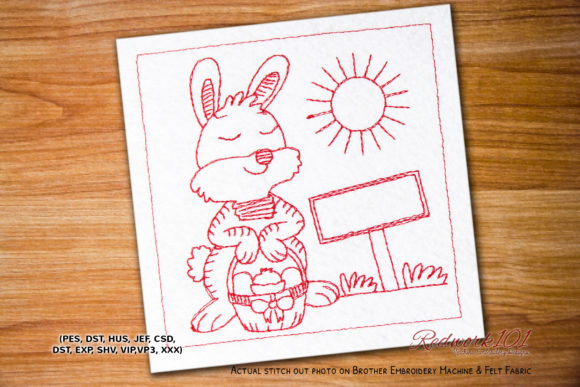
From a designer’s perspective, the linework appears to be moderate in complexity. The rabbit and egg motif is clear, cute, and proportioned well for a chest logo or a sleeve detail. The description notes that the box stitch shown in the picture is optional and that the outer box color is typically different unless it is part of the design itself. This means you have flexibility: you can use the design as a standalone motif or frame it with a contrasting border. That optional box stitch is a smart feature for commercial embroidery because it allows you to adapt the design to different garment placements and brand styles.
If your business leans toward rustic, handmade, or classic aesthetics, this design will feel like a natural fit. If your brand is modern or minimalist, you can still use it by skipping the outer box and keeping the rabbit and egg clean and simple.
Real Business Use: Where This Design Earns Its Keep
In my work with small businesses, I have seen how a single embroidery file can become a signature element across multiple products. The Easter Rabbit with Egg Redwork design is ideal for several real-world applications.
Embroidered Patches for Merchandise and Events
This design translates beautifully into an embroidered patch. The redwork lines are distinct enough to hold their shape at a moderate patch size, and the optional box stitch gives you a natural border. For a small business running a seasonal promotion, Easter event, or spring product launch, patches can be sewn onto tote bags, aprons, or even given as customer gifts. The handmade feel of the redwork style adds perceived value to any finished product.
Staff Uniforms and Aprons
For a café, bakery, or boutique, apron embroidery is a powerful branding tool. The Easter Rabbit with Egg Redwork design works well as a chest logo on a denim or canvas apron. The red thread stands out against light fabrics and creates a cohesive look for staff uniforms. I would recommend testing it on a sample apron first to see how the stitch density behaves on thicker fabric. The design’s moderate linework should be comfortable for most commercial embroidery machines.
Caps and Tote Bags
Cap embroidery requires designs that are compact and readable at a small size. The rabbit and egg motif is compact enough for a cap front, but you will want to test it at the actual stitch size before committing to a production run. Tote bag design is another natural fit. Whether you are using cotton totes for your shop or selling branded merchandise, this design adds a professional, handmade accent that customers will notice. The optional box stitch can be used to frame the design on a tote, giving it a finished, label-like appearance.
Product Packaging and Customer Gifts
Beyond apparel, this design can be used on product packaging accents, such as small fabric tags or reusable bags. For handmade product sellers on Etsy, a small embroidered tag with this design can become a signature element that buyers recognize and trust. It also works well as a printable mockup element for your online listings, helping customers visualize the finished product before they buy.
Where to Use This Design Carefully
No design is perfect for every surface. Here are the areas where the Easter Rabbit with Egg Redwork design requires extra attention.
Small Patch Sizes and Cap Fronts
If you plan to use this design as a small patch or on a cap front, test it at your target size first. Redwork designs rely on continuous lines, and if the design is scaled down too much, the lines may become too thick or lose detail. I recommend stitching a test sample at 70% of the original size and checking if the rabbit’s features remain clear. If the design comes with the optional box stitch, consider omitting it for very small applications to save space and reduce stitch density.
Curved Surfaces and Textured Fabric
Curved surfaces like cap crowns or sleeve cuffs can distort the design if not properly stabilized. The redwork style is somewhat forgiving because it uses continuous lines rather than dense fills, but you still need to use adequate stabilizer and hoop the fabric correctly. Textured fabrics like toweling, linen, or heavy canvas can also affect how the lines register. Test on your actual fabric before production.
Dark Uniforms and High Contrast
Redwork by definition uses red thread, which works best on light or neutral fabrics. If your business uses dark uniforms or black merchandise, red thread may not provide enough contrast. In that case, consider switching to a lighter thread color or using the design as a base for a different colorway. The description does not specify thread colors, so you have the freedom to adapt. But always check the contrast in a sample before stitching a batch.
Frequent Washing and Abrasion
Items that need frequent washing, such as bar aprons, kitchen towels, or staff uniforms, require durable stitching. The redwork design’s continuous lines are generally robust, but if the stitch density is too high, the thread may wear faster. Use a quality polyester or rayon thread and a proper backing to ensure longevity. For high-use items, I recommend a test wash cycle to see how the design holds up.
How This Design Affects Brand Identity and Customer Trust
Every embroidery design you choose for your business sends a message. The Easter Rabbit with Egg Redwork design communicates friendliness, tradition, and care. It does not feel corporate or mass-produced. For a small business, that handmade quality is a competitive advantage. Customers who see a thoughtfully embroidered design on an apron, tote, or patch are more likely to perceive your brand as professional and detail-oriented.
This design also supports visual consistency across your product line. If you use it as a recurring element on your custom apparel, packaging, and merchandise, it becomes a recognizable signature. That consistency builds trust and recognition over time. For Etsy sellers and handmade product designers, this design can be a reliable asset that ties your seasonal and year-round offerings together.
From a brand identity standpoint, the redwork style suggests heritage and craftsmanship. It pairs well with natural materials, earth tones, and vintage typography. If your brand identity is playful, rustic, or artisanal, this design will reinforce that image. If your brand is sleek and modern, you may need to use it sparingly or adapt the color palette.
Practical Embroidery Designer Notes
Here are the steps I recommend before you use this design for commercial embroidery.
Test in Black and White First
Before you commit thread and fabric, print the design in black and white at the intended stitch size. This simple step helps you evaluate the proportions, spacing, and clarity of the lines. If the rabbit’s ear or the egg shape looks unclear on paper, it will likely need adjustment before stitching.
Check Performance at Small Patch Size
If you plan to produce embroidered patches, test the design at the actual patch size. The optional box stitch may need to be removed or resized to fit within your patch border. Ensure the design has enough negative space to avoid a crowded look.
Review Thread Color Contrast
The description mentions that the outer box color is different in most designs unless it is part of the design itself. This means you have the option to choose a contrasting thread color for the box. For maximum readability, choose a thread color that stands out against your fabric. Red on white or cream is classic, but you can also experiment with other colors as long as the contrast is sufficient.
Inspect Spacing and Stitch Density
Redwork designs can sometimes have overly dense areas where lines cross. Inspect the stitch density in the digitized file. If the density is too high, the fabric may pucker, especially on lighter materials. If you do not have the exact stitch count, ask your digitizer or supplier for density information before production.
Confirm Hoop Size and File Format
Before you begin, confirm the hoop size required for the design. The description does not specify this, so you will need to check the file details. Also confirm that the embroidery file format is compatible with your machine. Most commercial machines accept formats like PES, DST, or EXP, but always verify before loading.
Test on Real Fabric with Proper Stabilizer
Always stitch a test sample on the actual fabric you plan to use. Use the appropriate stabilizer for the fabric type. For example, tear-away stabilizer works well on stable woven fabrics, while cut-away is better for knits or stretchy materials. The test will reveal any issues with tension, thread breaks, or fabric distortion.
Create a Mockup for Client Approval
If you are producing this design for a client or for your own product line, create a printable mockup showing the design on the actual garment or item. This helps set expectations and reduces the risk of rework. A simple photo mockup or digital overlay can be enough for client approval.
Compare Beside Other Design Assets
If you already have other embroidered designs in your product line, place the Easter Rabbit with Egg Redwork design beside them to check for visual consistency. The line weight, style, and overall feel should complement your existing design assets. If it looks out of place, you may need to adjust the thread color or scale.
Confirm Commercial Licensing Before Business Use
Before you use this design for commercial embroidery on products you sell, confirm the licensing terms. The description does not specify usage rights, so contact the seller or digitizer to ensure you have the appropriate permissions. Using a design without proper licensing can lead to legal issues and is not worth the risk.
Final Thoughts: A Reliable Asset for Small Business Merch
The Easter Rabbit with Egg Redwork design is a solid choice for small business owners who want to add a handmade, friendly touch to their merchandise. It works well for embroidered patches, apron embroidery, cap embroidery, and tote bag design. The optional box stitch gives you flexibility, and the redwork style brings a classic, trustworthy feel to any finished product.
As with any machine embroidery design, the key to success is testing. Test your fabric, test your stabilizer, test your thread, and test your size. If you take the time to dial in the details, this design can become a repeating signature across your small business merch and custom apparel line. It is not just a seasonal decoration—it is a digital embroidery file that, when used well, builds brand recognition and customer trust.
If you are ready to add a clean, professional, and friendly design to your product line, the Easter Rabbit with Egg Redwork is worth a close look. Stitch it, test it, and let it work for your brand.