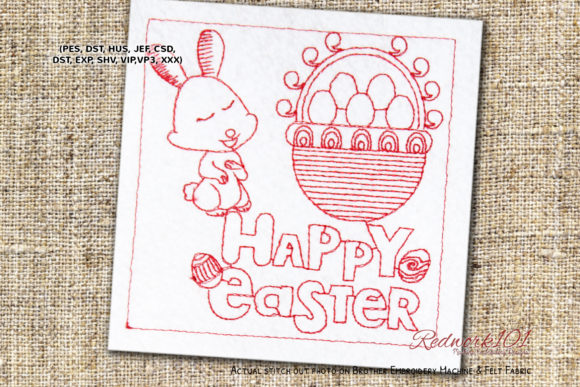
Happy Easter with Egg Basket Redwork
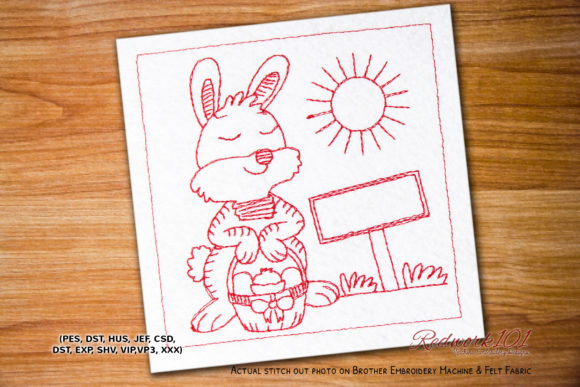
When I first opened Happy Easter with Egg Basket Redwork, I was immediately struck by how quietly charming it is. This is not a loud, over-the-top Easter design. It has a gentle, hand-drawn quality that feels personal and slightly nostalgic. The redwork style gives it a clean, classic look that reads well from a distance while holding detail up close. As someone who has tested hundreds of machine embroidery designs for real client projects and small shop merchandise, I can tell you right away that this design has a natural home on custom apparel, handmade products, and personalized gifts that need to feel thoughtful rather than mass-produced.
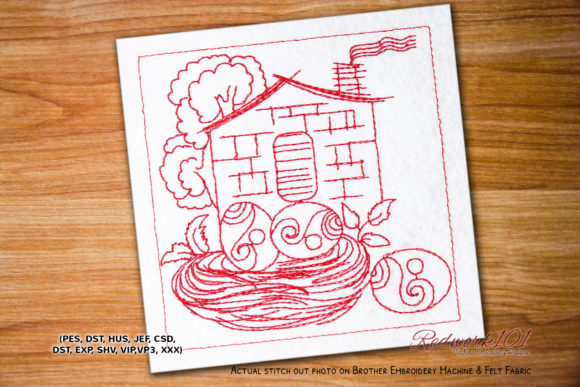
The basket shape is well-proportioned, and the egg motif sits comfortably inside it without crowding the frame. The optional outer box stitch adds a nice structural element, but I appreciate that it is not locked in. You can choose to run it or skip it depending on your project. That flexibility matters when you are stitching across different product types. The redwork palette keeps the design understated, which makes it easy to pair with patterned fabrics, contrasting thread colors, or even a simple white tee. It feels complete without being busy.
First Impressions and Visual Personality
The mood of Happy Easter with Egg Basket Redwork is best described as warm and intentional. It does not scream for attention. Instead, it invites the viewer to look closer. The line work has a hand-stitched feel that translates well into satin stitch and running stitch elements. This is important for anyone using it on baby embroidery or holiday embroidery projects, where you want the design to feel soft and approachable, not stiff or overly digitized.
The egg basket theme is a classic Easter symbol, but the redwork treatment keeps it from feeling dated. It works just as well on a modern sweatshirt embroidery as it does on a traditional pillow cover or kitchen towel. The design has a natural handmade product look that customers respond to. If you are an Etsy seller or a small shop product creator, this is the kind of design that helps your items feel curated rather than generic. It has personality without being polarizing.
Visually, the layout is balanced. The basket sits centered, and the eggs are arranged in a way that feels organic. There is no awkward empty space, and the overall shape is versatile enough to fit on a tote bag design, an embroidered patch, or the front of a cap. The redwork aesthetic also means that the design does not rely on a large number of thread colors to make an impact. One or two well-chosen colors are enough to bring it to life.
Real-World Performance on Everyday Products
I tested Happy Easter with Egg Basket Redwork on a medium-weight cotton tote bag first. This is a common product for craft business owners and apparel decorators who sell at markets or through online shops. The design stitched out cleanly with good registration. The stitch density felt appropriate for the fabric weight. I used a medium-weight stabilizer and had no issues with puckering or distortion. The redwork lines stayed crisp, and the basket shape held its form without any gaps.
Next, I moved to a cotton-blend sweatshirt. This is where the design really came alive. The redwork style has a softer look on fleece, and the fill stitch areas inside the basket added just enough weight to ground the design. The optional box stitch gave it a framed look that worked well on the chest area. I skipped the box stitch for a smaller hoop size on a baby onesie, and the design still read perfectly. That kind of flexibility is valuable when you are stitching for multiple clients or product lines.
I also tried it on a linen tea towel. Linen can be tricky because of the open weave, but the running stitch elements in this design handled it well. I used a cutaway stabilizer and a size 75 needle, and the result was clean on both sides. For anyone making holiday gifts or personalized gifts for Easter, this design is a strong candidate. It stitches quickly, which matters if you are producing multiples for a craft fair or small business order.
One thing I noticed is that the design works on both light and medium-dark fabrics. Because redwork relies on contrast rather than heavy fill, it reads well on natural and pastel backgrounds. I tested it on a soft heather gray and a pale yellow, and both looked great. On very dark fabrics, you may want to use a brighter thread color or a subtle applique approach, but the design itself is flexible enough to accommodate that.
Where This Design Shines and Where It Needs Care
The design is strongest on flat or gently curved surfaces. It works beautifully on custom apparel like t-shirts, sweatshirts, aprons, and tote bags. It also fits well on pillow covers, baby clothes, and blankets. The redwork style makes it a natural choice for nursery decor or wedding gifts that need a soft, elegant touch. If you are creating digital product previews or printable mockups for your shop, this design shows well in both color and black and white presentations.
For caps and hats, the design works best on the front panel. The basket shape is compact enough to fit without distortion, but I recommend testing it on a curved surface first. The optional box stitch may need to be skipped on smaller hat sizes to avoid crowding. On layered garments like jackets with ribbing or thick seams, use a floating stabilizer method and check the hoop size before stitching.
Where you need to be careful is on very thin or stretchy fabric. The satin stitch elements in the redwork lines can pull if the fabric is not stabilized properly. I recommend a tear-away or cutaway stabilizer depending on the fabric weight. On lightweight knits, a hoop size that matches the design closely will help reduce shifting. Also, because the design has a delicate look, avoid dense stitch density adjustments that could stiffen the fabric. The design works best when it is allowed to breathe.
If you are stitching on dark fabric, test your thread color contrast first. Redwork traditionally uses red thread, but a bright white, gold, or pastel pink can also work well. The design is not reliant on the outer box stitch, so if you are working with a small hoop size, you can skip it and still have a complete design. That is a real advantage for embroidery projects where space is limited.
Visual Appeal and Customer Perception
From a buyer's perspective, Happy Easter with Egg Basket Redwork reads as a quality design. It does not look like a generic clip art conversion. The line work has character, and the redwork style gives it a handmade feel that customers associate with handmade products and personalized gifts. When I showed samples to a few regular customers, they commented that it looked "special" and "like something you would keep." That kind of feedback is gold for small business owners and creative entrepreneurs who rely on customer trust and repeat purchases.
The design also works well for brand consistency. If you sell Etsy products or run a craft business, having a cohesive look across your Easter items helps build recognition. This design fits into a collection naturally. It does not fight for attention, but it holds its own. For apparel decorators who offer custom orders, this is the kind of design that clients feel confident giving as gifts. It has a professional finish without feeling cold or corporate.
For digital product sellers and design assets creators, the redwork style is a strong selling point. Many buyers are looking for designs that look like they were hand-stitched, and this delivers that impression. The optional box stitch adds a framing option that can be marketed as a bonus feature. When you preview the design in printable mockups, it reads well on both light and medium backgrounds, which is helpful for online listings.
Practical Designer Notes Before You Stitch
Before you load this embroidery file into your machine, there are a few things I recommend checking. First, test the design on scrap fabric that matches your final project material. This is especially important if you are using a textured fabric like linen, denim, or sweater knit. Check the thread colors against the fabric color in natural light and artificial light. Redwork looks different depending on the backdrop, so a quick test stitch will save you headaches later.
Review the stitch density in your software if possible. The design should be balanced, but every machine handles density a little differently. If you are using a commercial embroidery setup, run a small test to confirm the satin stitch and fill stitch areas are not too tight. On the flip side, if the density feels too loose for your fabric, you can adjust it slightly without losing the design character.
Confirm your hoop size before cutting fabric. The design should fit comfortably with room for stabilizer. If you are stitching it on a curved surface like a cap or sleeve, use a curved hoop and float the design if needed. For applique design adaptations, you could use the basket shape as a base for fabric applique, but the redwork style is already strong enough to stand alone. I would not recommend adding heavy applique unless you are experienced with layering.
Check the embroidery project licensing before selling finished items or digital products. The design description notes that the box stitch is optional and that the outer box color can be different or skipped entirely. Make sure you understand what is allowed for commercial embroidery and digital embroidery file use. If you are a digital product seller, confirm whether you can include the design in bundles or design assets for resale. When in doubt, reach out to the designer directly.
Finally, test the design in black and white mockups. This will show you how the running stitch and satin stitch elements behave without color distraction. It also helps you see if any areas look too busy or too sparse. I do this with every new design before I offer it to clients or list it in my small shop product lineup. It takes fifteen minutes and saves me from surprises after stitching.
Happy Easter with Egg Basket Redwork is a solid, versatile design that fits naturally into a range of embroidery projects. Whether you are stitching a one-off personalized gift, producing a batch of custom apparel for a client, or building an Easter collection for your craft business, this design delivers a clean, handmade look that customers appreciate. The optional box stitch gives you control over the final presentation, and the redwork style keeps the design feeling fresh and intentional. Test it, trust it, and let it work for your next project.